How to Practice With a Metronome (Without Hating It)
The metronome is every teacher’s favorite tool and every student’s least favorite. Here’s how to use it so it actually makes you a better, tighter musician.
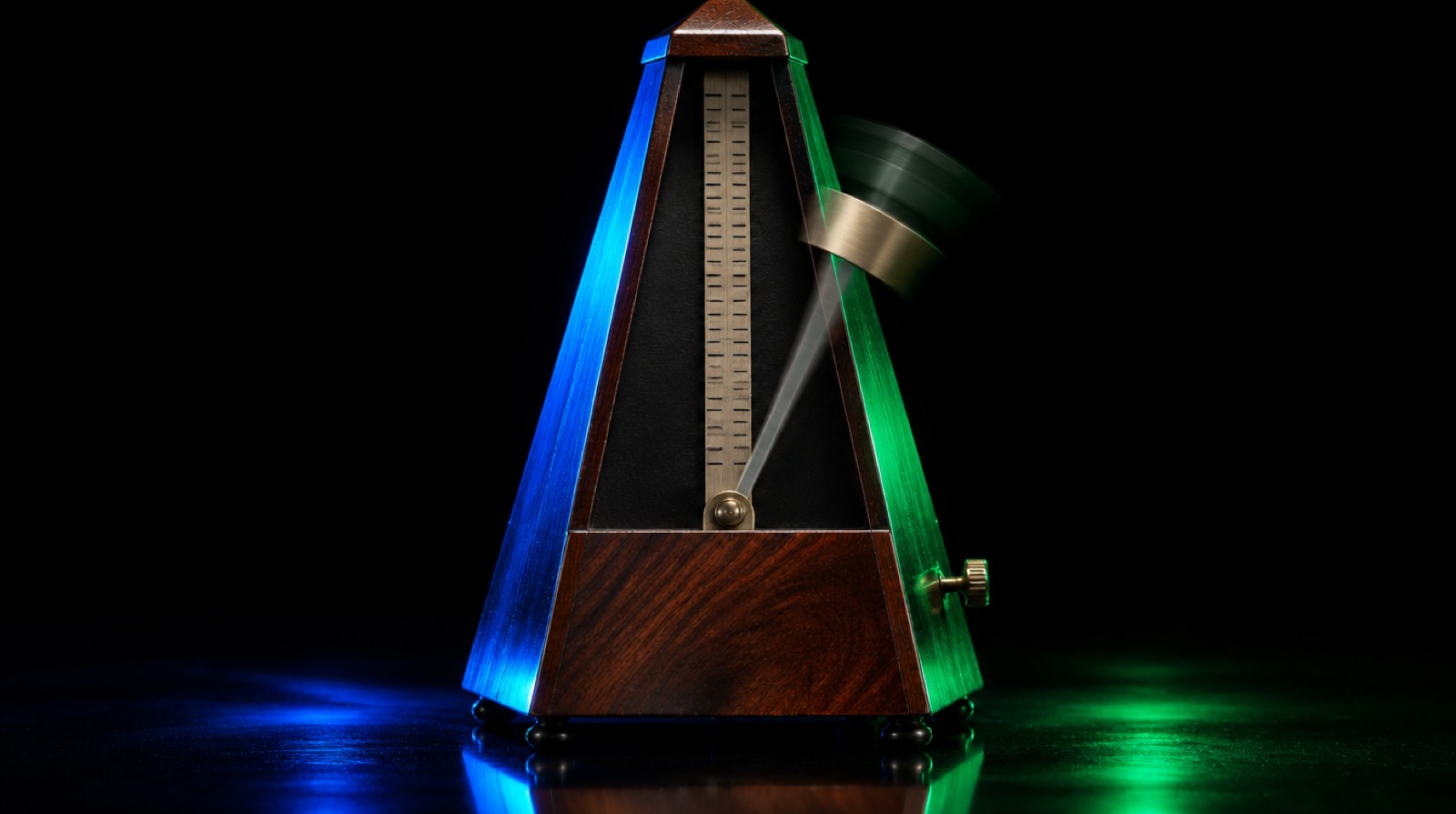
Nobody in a band ever complained that the bass player had too good timing. Steady time is what makes music feel good, and it’s what separates players who sound “almost right” from players who sound pro. The metronome is how you build it.
The problem: most people use it wrong, find it frustrating, and give up. Here’s how to use it well.
Why practicing with a metronome works
- It exposes rushing and dragging you can’t hear on your own. Everyone speeds up in hard passages and slows down in easy ones.
- It makes progress measurable. “I can play this at 92 BPM” is a fact you can improve on.
- It prepares you to play with others. Drummers, backing tracks and recordings all expect steady time.
Understanding BPM
BPM means beats per minute. At 60 BPM, there’s one click per second. Most pop songs live between 90 and 130 BPM; ballads are slower, punk and drum & bass much faster.
| Tempo | BPM | Feels like |
|---|---|---|
| Slow ballad | 60–80 | Relaxed, spacious |
| Mid-tempo pop / R&B | 85–110 | Head-nodding groove |
| Upbeat pop / rock | 110–140 | Driving, energetic |
| Punk / fast rock | 150–200 | Urgent |
How to choose the right tempo
Start at the speed where you can play the passage perfectly, even if that’s painfully slow. Then:
- Play it three times in a row without mistakes.
- Raise the tempo by 4–5 BPM.
- Repeat until it falls apart, then drop back 10 BPM and finish clean.
- Write down your best clean tempo. Start a little below it tomorrow.
Why so slow? Your hands learn exactly what you repeat. Repeating a passage sloppily at speed teaches sloppiness. Repeating it cleanly at a slow tempo teaches the right movement, and speed comes with it.
6 metronome exercises for any instrument
1. Lock in on quarter notes
Play one note on every click. Try to make your note and the click sound like one sound, so the click “disappears”.
2. Subdivide
At the same tempo, play 2, then 3, then 4 notes per click. Moving between eighths, triplets and sixteenths is where timing really gets tested.
3. Click on 2 and 4
Set the metronome to half the tempo and hear each click as beats 2 and 4, the backbeat. It forces you to feel beats 1 and 3 yourself, like a real groove.
4. One click per bar
Set it very slow so it only clicks on beat 1. You keep time for the whole bar on your own. Great for internal time.
5. Gap click
Play with the click for two bars, then mute it (or turn the volume down) for two bars and see if you land together when it comes back.
6. Play a real song with a click
The ultimate test: play along with a recording and a click at the same time. You’ll learn the song’s feel and steady time together.
Practicing with a click track synced to a song
A plain metronome doesn’t know your song. Real recordings often drift a little, especially older ones recorded without a click, so a fixed metronome goes out of sync after a few bars. A click track synced to the recording follows the song’s actual beats.
With Omnes you upload a song (or paste a YouTube link), it detects the BPM and the position of every beat, and builds a click that lines up with the music. Preview it, adjust it, and download it for rehearsals or live shows.
Common mistakes
- Practicing too fast. The number one problem. If you’re fighting the click, slow down.
- Only using it for exercises. Use it for songs too.
- Never turning it off. The goal is steady time on your own. Mix click practice with playing along to records.
- Click too quiet. If you can’t hear it over your instrument, you can’t lock in. Use headphones.
Metronome tips by instrument
- Guitar: practice strumming patterns with the click on every beat, then only on 2 and 4. Your strumming hand should move in steady down-up eighth notes even when you don’t hit the strings.
- Bass: focus on note length, not just note start. Let a note ring for exactly one beat, then stop it cleanly.
- Drums: practice grooves at very slow tempos (50–60 BPM). Slow tempos expose uneven hi-hats and late kicks.
- Piano: practice hands separately with the click before playing hands together.
- Voice: sing scales and runs with a click to keep long phrases from rushing.
A simple weekly plan
| Day | Exercise | Time |
|---|---|---|
| Mon | Quarter notes and subdivisions | 10 min |
| Tue | Click on 2 and 4 | 10 min |
| Wed | One click per bar | 10 min |
| Thu | Gap click | 10 min |
| Fri | Play a real song with a synced click | 15 min |
Track your best clean tempo for each exercise. Small weekly gains add up quickly.
The short version
Start slow enough to be perfect, raise the tempo in small steps, and play with the click until it disappears into your playing. Then take it off and keep the time yourself. Your bandmates will notice.
Frequently asked questions
What BPM should I practice at?
The fastest tempo at which you can play the passage perfectly three times in a row. Then raise it by 4–5 BPM at a time.
How do I find the BPM of a song?
Tap along and count, or upload the song to a BPM detector like Omnes, which finds the tempo and builds a click track synced to the recording.
Should beginners use a metronome?
Yes. Short daily sessions with a metronome build steady time early, before bad habits form.
What is a click track?
A metronome recording that plays in time with a song, used by drummers, bands and live performers to stay in sync.